
We carry the Nakba in our blood, not as a history lesson but as a lived inheritance. It echoes in my father’s voice, how his eyes light up when he talks about our village, Ain Karem. Our land is still there, stone by stone, tree by tree, but the people who built it are not.
My father was seven when they left. The massacre of Deir Yassin had just taken place, and the story travelled not just in whispers but through deliberate terror. The Zi0n1st militias spared some survivors not out of mercy, but as messengers of fear. They were sent to neighboring villages to tell what had happened: women raped, children killed, entire families destroyed.
When the news reached Ain Karem, the elders gathered. They weighed their options with heavy hearts. The village had little ammunition left, not enough to protect everyone. So, they made a heartbreaking decision to walk the women and children to safety across the Jordan River. The elders wanted to secure them, then return to defend the village. But they never returned. Three months became three years. Then thirty. Then seventy-five. And the land remained, but it was no longer theirs to touch.
My father walked that journey as a boy, with blistered feet and a heart too young to understand what it meant to leave home forever. But he never forgot, not the fear, not the moment they reached the river, when a kind stranger ferried them repeatedly until they crossed safely. He remembered meeting a Jordanian soldier on the other side, who asked where they were coming from. When they answered, he welcomed them.
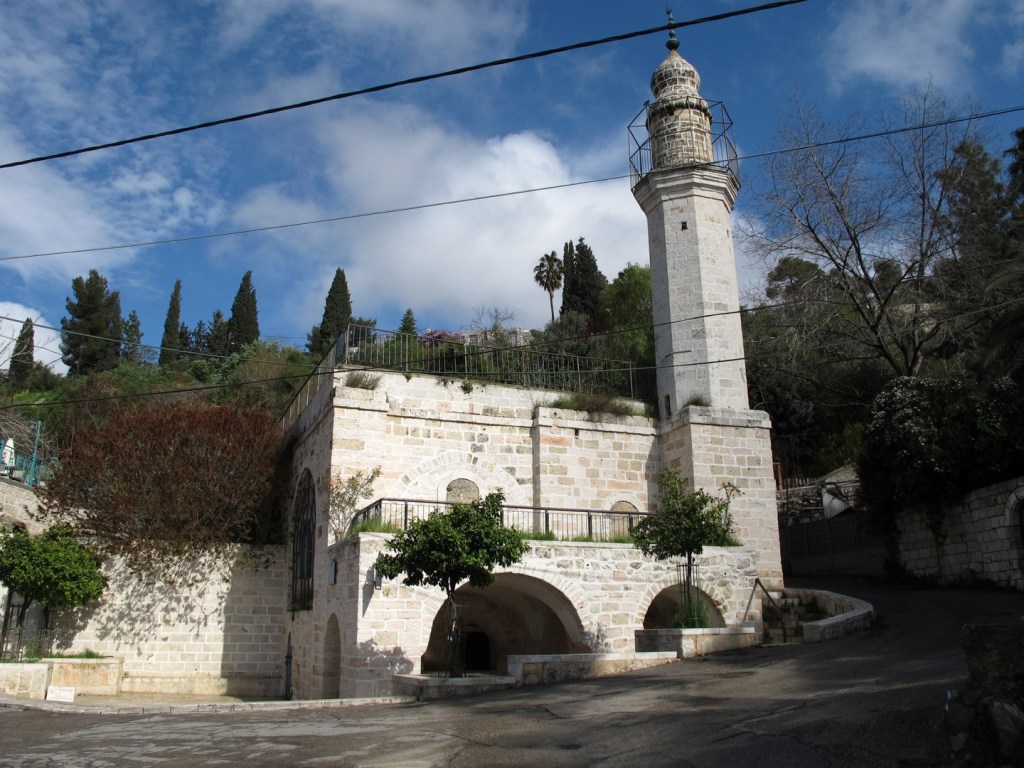
But what he remembered most clearly, and repeated most often, was the trip to a mosque. At 5:30 every morning, his grandfather would take him by the hand and walk him to pray. After prayer, they would go to their land and begin the day’s work. He loved that memory. He clung to it like a child holds a beloved toy. And when I showed him a photo of the mosque years later, one I found online, his face lit up. He recognized it instantly, like no time had passed. Like the years hadn’t piled between him and that sacred walk. He would ask me to show him the photo again and again, and each time he would smile and tell the same story. It was his way of returning.
There’s also the Yoyo. He told my younger sister he dropped it somewhere & kept thinking about it all the way to exile. That Yoyo became more than a toy. It became a symbol of everything that was taken: his home, his routine, his land, his sense of safety, his belonging. A child’s grief, held all the weight of a nation’s loss.
That’s what the Nakba is. Not just the destruction of homes, but the tearing apart of time. Of memory. It’s the mosque you still remember. The soil your feet still dream of touching. The toy you never got to hold again.
On Nakba’s anniversary, we hold my father’s stories with reverence. Hoping one day, we can visit and give him the closure he never had.
 Glittery Gaze
Leave a comment